*A biography about Roger Mais:
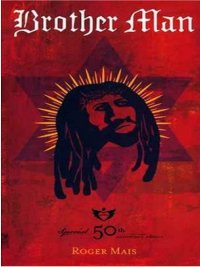 Roger Mais was born on the 11th of August, 1905 in the country of Jamaica. He was a novelist adept at depicting the lives of the unprivileged in such books as ' The Hills Were Joyful Together' and 'Black Lightning'.Mais was also a poet and playwright. By 1951, Mais had won ten first prizes in the West Indian literary competitions. This book 'Brother Man' was originally published in 1954; its a tragic story of an honest Rastafarian healer caught up in a web of intrigue and betrayal in Jamaica's tough West Kingston slums. Roger Mais was left to rest peacefully in the year of 1955.
* Critics view:
Most Critics believed that Roger Mais was interested in symbols stemming almost exclusively from the stories about biblical characters and from Greek mythology. Some also believed that he was trying to bring across a religious view of Rastafarianism.
* The religious view of Rastafarianism:

- Ratafarianism relies most heavily on certain passages from the King James Bible.
- Marcus Garvey, born in 1887, would direct the philosophical ideologies that would eventually grow into the Rastafarian movement.
- As with many other groups which selectively acknowledge biblical passages, the Rastafarians will only accept those parts of the Bible which appear to agree with their unique theological perspectives.
- One of the most important aspects of Rastafarianism is its strict belief in the word of the Bible.
- The rastafarian religion is about love, god, and living life as natural as possible. Rastas have a huge belief in God. As a result we know that love must come first in all things.
* Prose Fictions:
1. Novel - A fictional prose work with a relatively long and often complex plot, usually divided into chapters.
2. Novellas - A fictional prose work that is longer than a short story but shorter than a novel.
3. Short stories - A variety of small prose fictions with a less complex plot.
* Elements of Prose fictions:
1. Narrative Techniques- The style of telling a "story". Concentrate on the order of events and on their detail in evaluating a writer's technique.
2. Point of view - The perspctive on events of the narrator or a character in a story.
3. Characterization - The way in which the writer potrays the characters in a book, play or movie.
4. Setting - The period in time and place in which the events of a story are said to occur.
5. Theme - The central idea of a story that runs through a text.
6. Plot - The story or sequence of events in something such as a novel, play or movie. the way in which the author arranges events to develope his basic idea.
7. Style - The language of a poem or story primarily literal or figurative. the manner of expression.
8. Literary devices - An identifiable covention or structure that is employed in literature and story telling.
9. Imagery - Descriptive language that evokes sensory experience. anything appealing to the senses.
10. Syllable - A unit of organization for a sequence os speech sounds.
11. Irony - Humor based on using word to suggest the opposite of their literal meaning.
12. Satire - The experience of the vices and follies of an individual, usually with a view to correcting it.
13. Symbol - Something that on the surface is its literal self but which also has another meanung or even several meanings.
14. Allusion - A brief referance to a person, place, thing, event or idea in history of literature.
* Structural Devices:
1. Stream of consciouness - A narrative mode that seeks to potray an individual point pf view by giving the written equivalent of the character's thought process.
2. Interior monologue - A narrative technique that exhibits the thoughts passing through the minds of protoganists.
3. Flashback - An interjected scene that takes the narrative back in time from the recent or current point the story has reached.
4. Foreshadowing - Hints and clues that suggest the events of what is to come in the action of a play or story.
5. Time frame - A period during which something takes place or is projected to occur.
6. Motif - Any reoccuring element that has a symbolic significance in a story.
7. Juxtaposition - Two objects or texts that oppose one another.
* Types of Fiction:
> Eight types of fictions are:
1. Humorous Fiction
2. Science Fiction
3. Historical Fiction
4. Realistic Fiction
5. Animal Fiction
6. Traditional
7. Mystery.
8. Fantasy
* Literary Context:
1. Social - The indentical or similar social levels and social roles as a whole that influence the individuals of a group.
2. Political - This reflects the environment in which something is produced indicating its purpose or agenda.
3. Religious - This reflects on the beliefs on someone. what a person believes in, their religion.
4. Historical - The time in which something takes place or was created and how that influences, how you interpret it.
5. Ethnic - Reflects on the characteristics of people or a group. sharing common and a distinctive culture. religion or language.
6. Moral - Concerned with the judgement of the goodness and the badness of human action and character.
7. Intellectual - This is the science which deals with mental processes and behaviour.
8. Cultural - the way in which a person grew up. Its also the location where the person lives.
